
by Andrew (Andy) M Hanby
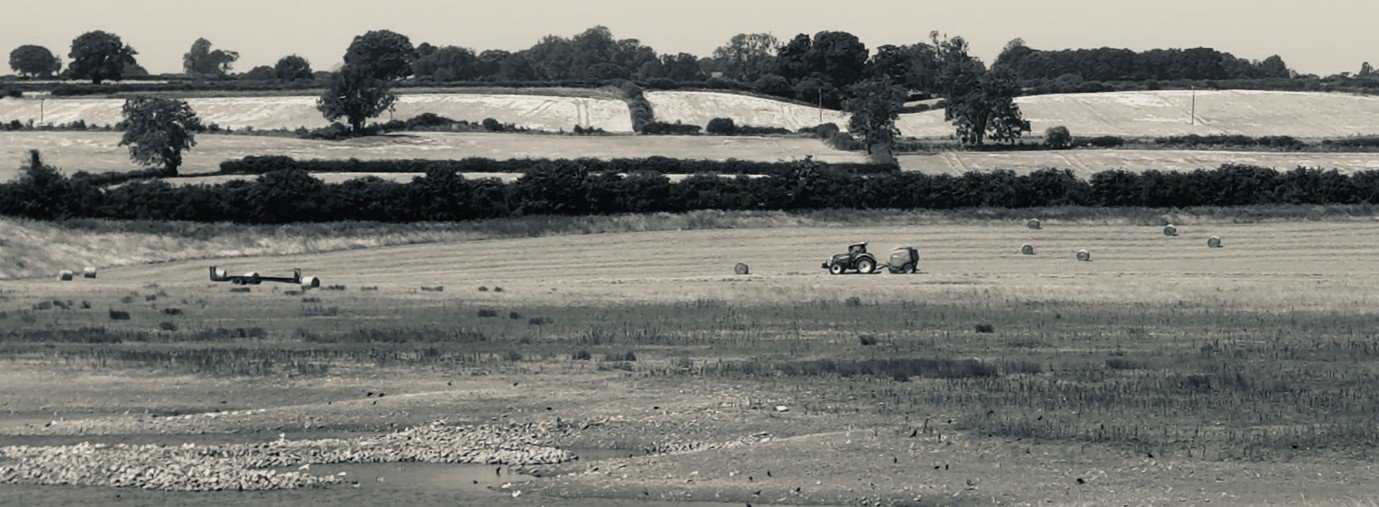
Harvest time comes to the Reserve Simon Warwick
The concept of the ‘more you know, the less you know’ is a positive world view that promotes the quest for greater knowledge and complacency in thinking. In general, it means we pay heed for example, climate experts regarding man-made global warming, than ‘the bloke down the pub’. I’d like to think I adopt this approach to knowledge, but with regards to the month of July, I am severely deficient. My feeling is that July is a ‘rubbish’ month for birds, but even in my own experience, this is never actually the case. It can be a hot and uncomfortable month, but again, this year, as this round up will demonstrate, it proves itself to be a great month for quality birdwatching.
For breeding success it was a month of finales, with Marsh Harrier successfully raising two young to flying phase. Most likely the ever-secretive Bitterns were also successful, although that went without proof. Corn Bunting were seen in the usual spot and appeared to be carrying food at times, but again absolute proof was hard to obtain. Hirundines too seemed to enjoy the hot weather, with a lot of young birds on the wing. From 3rd onwards, and into August, a Redstart family frequented the region of the Lingham to Flasks Lakes footpath, suggestive of successfully nesting not far away.
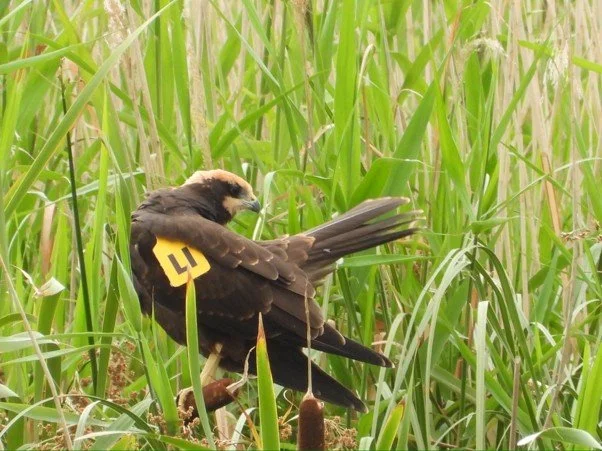
Marsh harriers were a success story Steven Hustwick
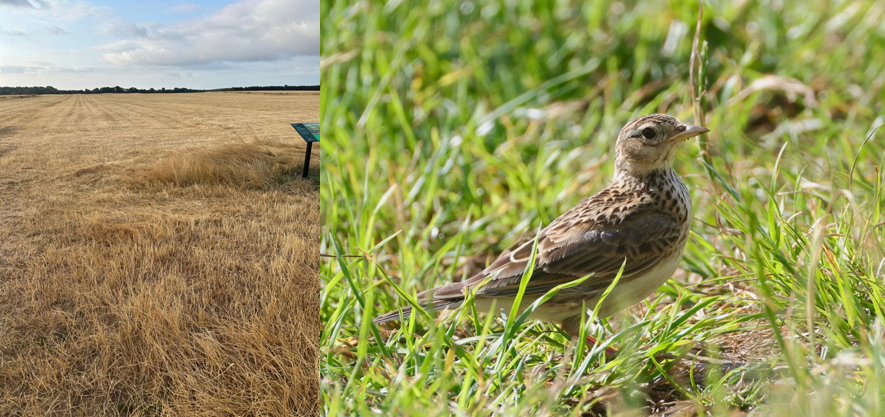
Skylarks may not have been, with enhanced desert-like conditions affecting the Middle and South Henges
Andy Hanby
The 6th was notable for an observer’s conversation with another, about how Caspian Terns were tu(e)rning up around the country and that surely, we should have a share of the action. The very next day, on 7th, seven Common Terns appeared on Flasks Lake, as did seven Arctic Terns on 15th, well short of the maximal ambitions.
A regular theme carried over from June, was the steady number of Mediterranean Gulls, continuing to match good numbers on the Yorkshire coast. Additionally, there were regular sightings of Yellow-legged Gull throughout the month. This included the regular sub-adult, but also a turnover of additional birds.
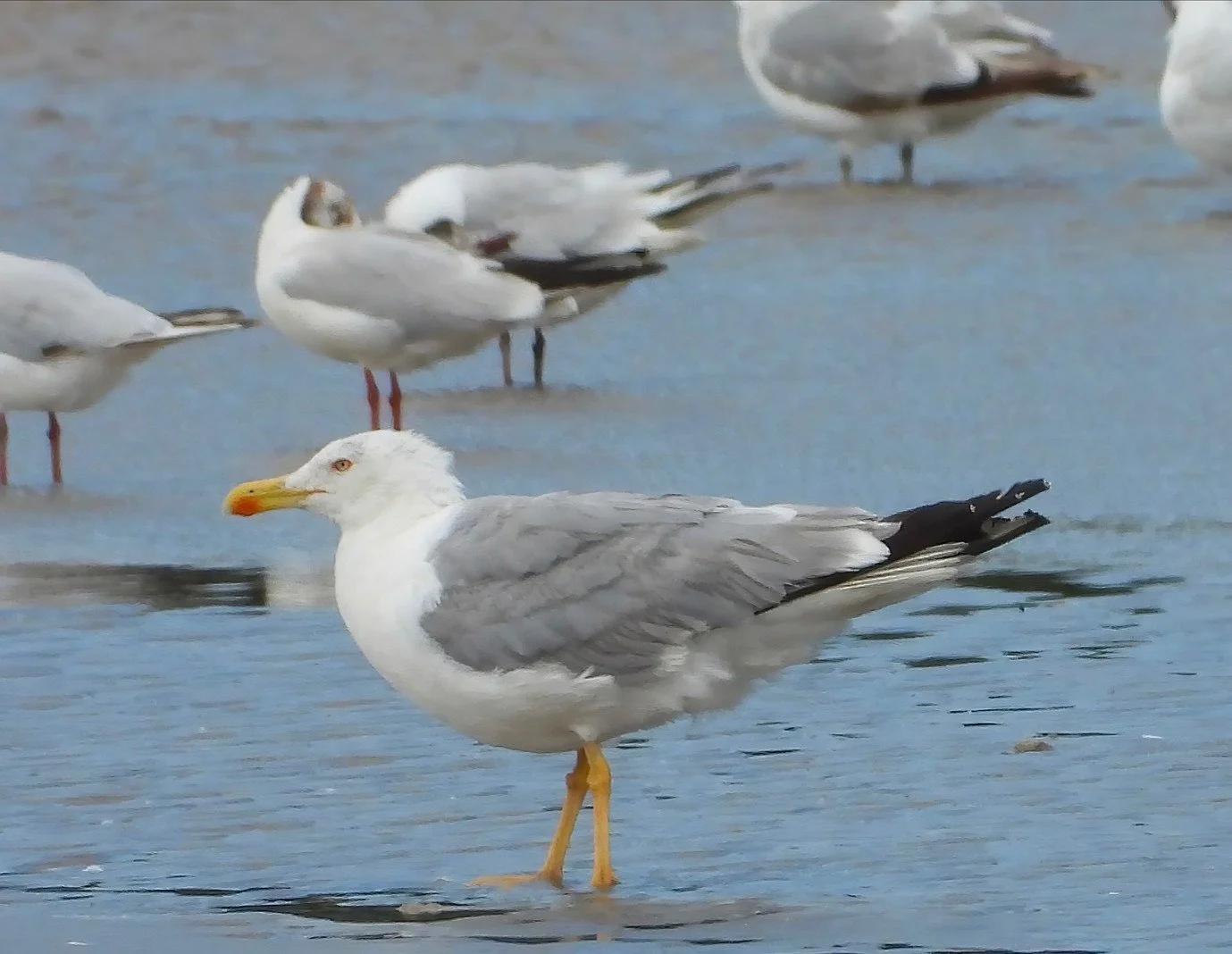
Adult Yellow-legged Gull on Flasks Lake Tim Jones
The 11th saw two members of the team having an away day on the coast, at Fraisethorpe. This is on the edge of Bridlington Bay. It is a great place for staging Common Scoter. At this time of year Common Scoter, specifically males in the main, leave the chores of duckling rearing in northern Europe to head to British waters. Thus, in the right conditions they can be heard inland as they move from the east coast to the Irish sea. On this day there were just over 1300 birds moving into the bay. What is the link with Nosterfield you say? Well, of these birds, a flock of circa 300 flew high inland mid-morning into thick cloud - demonstrating that overland movements can occur during the day as well. But even better- late afternoon, news emerged of 64 arriving at Kiln Lake; nearly all were males. Isn’t migration fantastic!
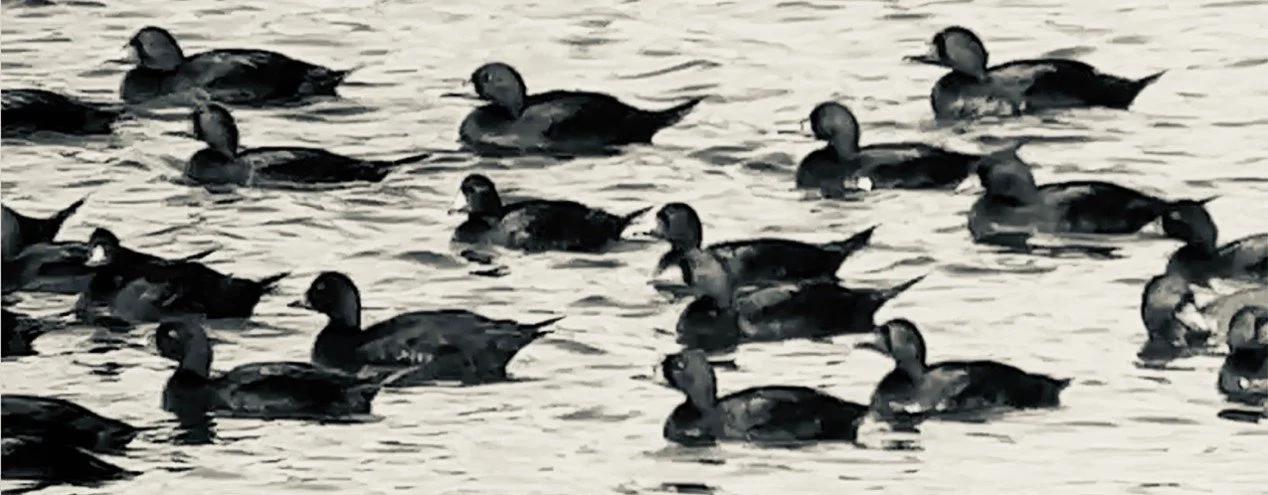
Part of the Kiln Lake Scoter flock Tim Scott
Then on 16th it happened…. one of the duo conversing the paucity of Caspian Terns at Nosterfield only went and found one! This magnificent bird stayed for three days and was well seen and appreciated.
A Caspian Gull was also seen on one of the days, but sadly no Caspian Plover.
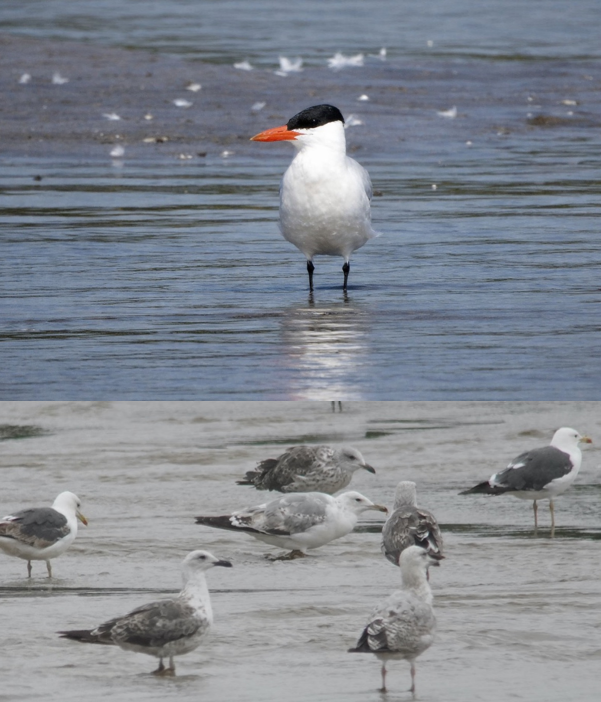
The Caspian Tern (top) Gareth Jones
Caspian Gull (bottom) Steve Clifton
Naturally, it would be reasonable to assume that the month had given its all; however, gulls continued to rotate through, and diverse species of waders dropped in in modest numbers, including Sanderling, Green Sandpiper, Greenshank and Black-tailed Godwit.
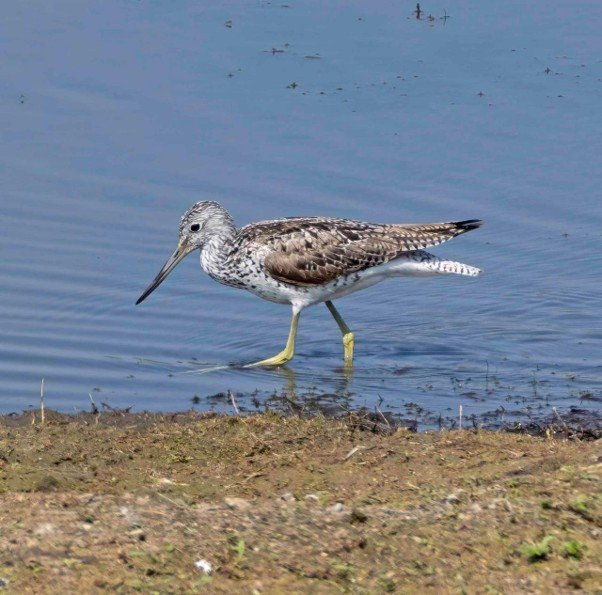
Greenshank Dave Ward
It was slow, but importantly it felt dynamic, with something different in the “lucky dip bag” every day. This part also had a notable thread – escalating numbers of Little Egret – culminating with 50 on the Reserve on 21st, then mysteriously the numbers plummeted to a handful.
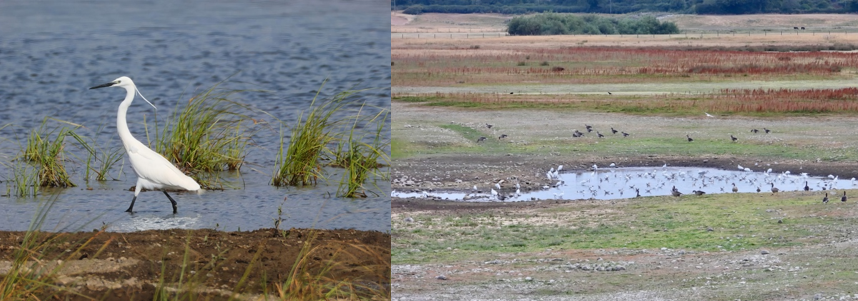
Little Egret(s) Left Andy Hanby Right Tim Jones
Another Common Scoter appeared on Flasks Lake on 28th, nine Pochard on 29th and without doubt, it felt like the last aria had been sung. But 30th July had other plans, with the finding of another area first and rarest bird in our area for quite a few years – a Franklin’s Gull. Gulls aren’t everyone’s ‘cup of tea’, but these are beautiful North American birds which have a track record of appearing in mid-summer. Sadly, most missed the bird as it made two brief appearances on Flasks Lake. The observers made up in bulk rather than rarity the next day, with a record tally of nine different Mediterranean Gulls through during a prolonged watch.
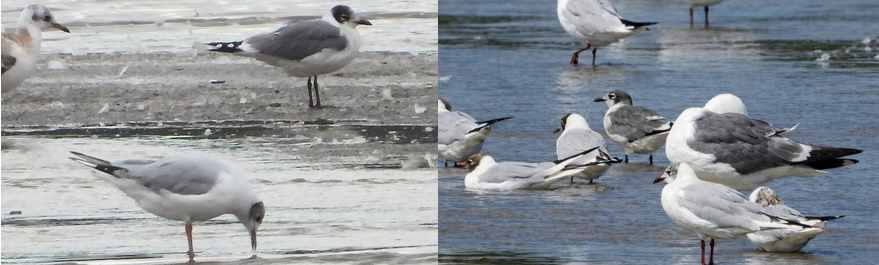
Franklin’s Gull - Left: Tim Jones Right: Gareth Jones