
by Andrew (Andy) M Hanby
It is by no means original to look at nature as a tapestry. There are the colours of the plant life, the diversity of insect and then there are the birds. The analogy can also be looked at from the point of view of continuity – threads of bird species, observations that appear, peter out and are replaced and interwoven with others.
August showed this well. Whilst there were high spots, there were also many examples where species appeared for a while, rather than fleetingly.
Yellow-legged Gull was an exemplar, present pretty much every day, with up to three (25th August).
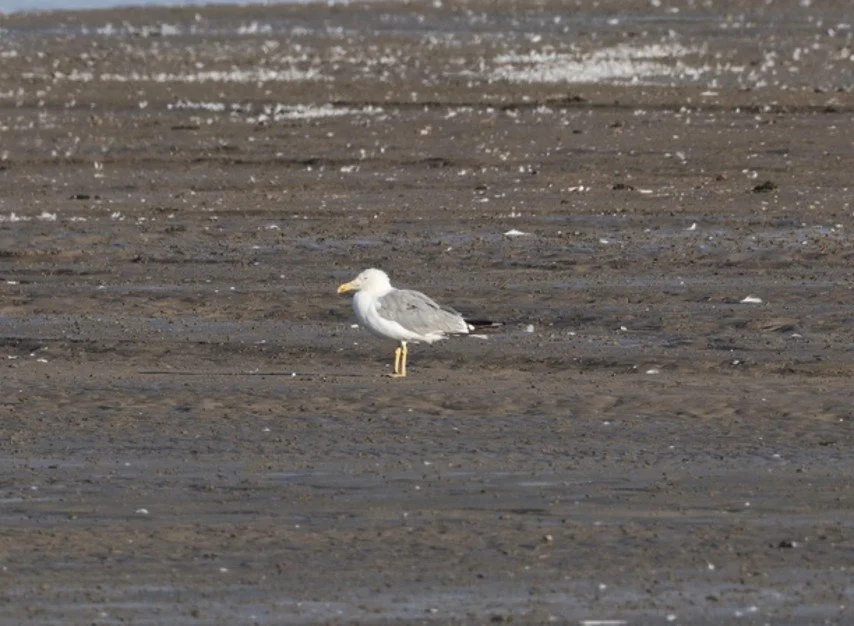
Yellow-legged Gull Andy Hanby
Mediterranean Gulls were well represented early on, with five on 1st, but no sightings after 18th.
Birds of prey were also regular, with Osprey being seen on ten different dates. Colour rings and plumage difference were indicative of as many as four different birds. Add to this the multiple Peregrine and Marsh Harrier sightings, and the raptor enthusiasts were not disappointed
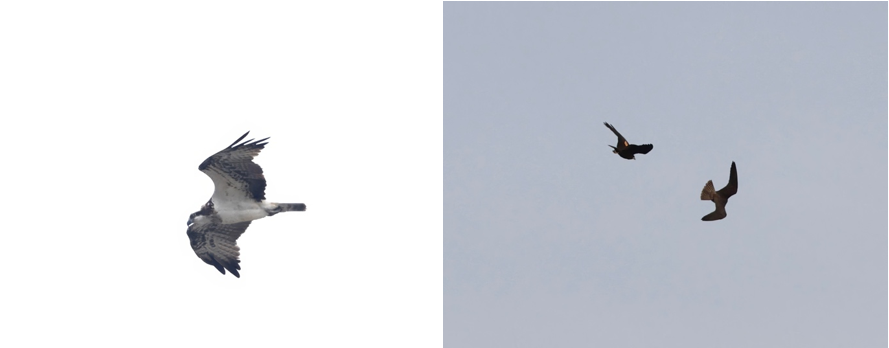
Osprey, left Marsh Harrier harrying Peregrine, right Andy Hanby
Regarding aquatic species, Great White Egret were recorded on ten dates. Notable also was a sporadic southerly movement of Goosander during the month, in addition to a maxima of 23 on Langwith Lake on 18th.
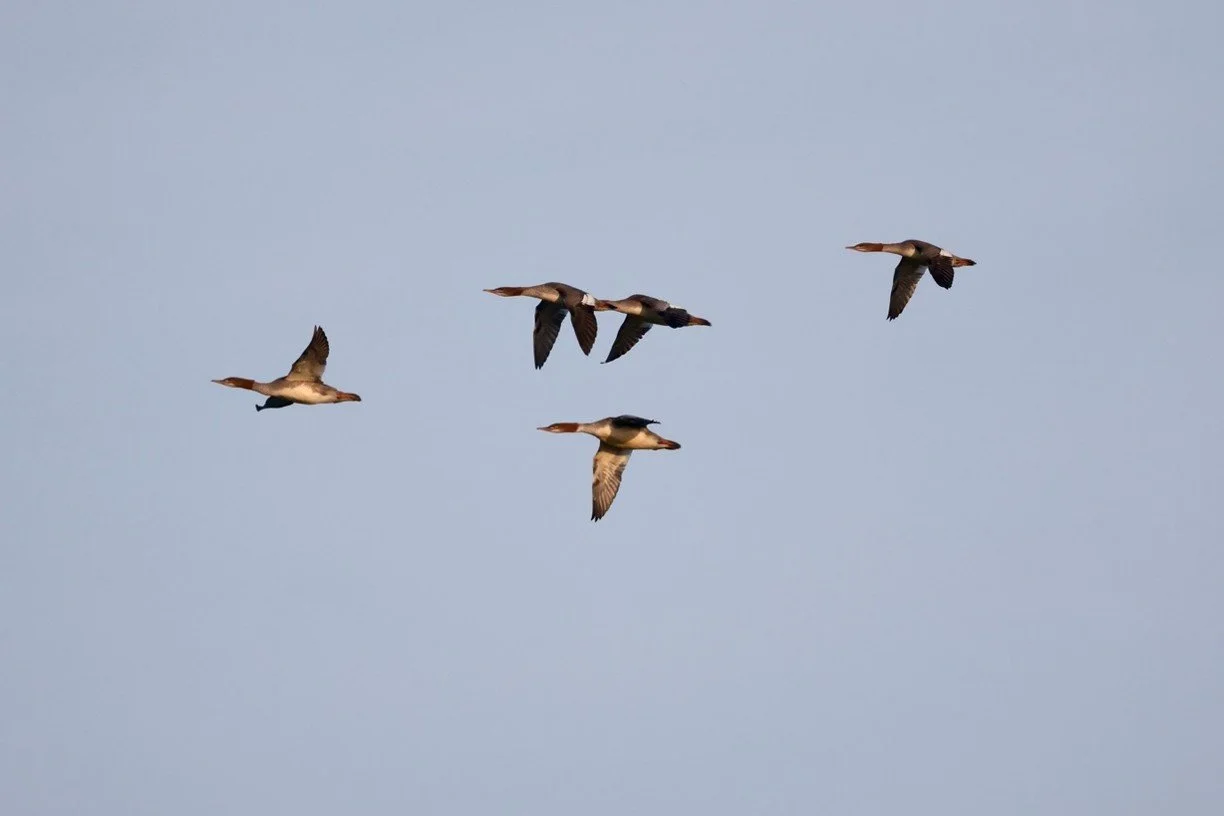
Goosander heading southwest Andy Hanby
It was an interesting day on 4th, with a rather confused Corn Bunting posing on wires at the top of Flasks Landing in poor visibility. In general, though, it was a wader day, with a smart, summer plumaged Grey Plover dropping in to Flasks Lake for less than a minute. Wood Sandpiper and Greenshank also appeared, the latter continuously throughout the rest of the month, with up to five present, whilst the former was more intermittent to 14th, with a maximum of up to three.
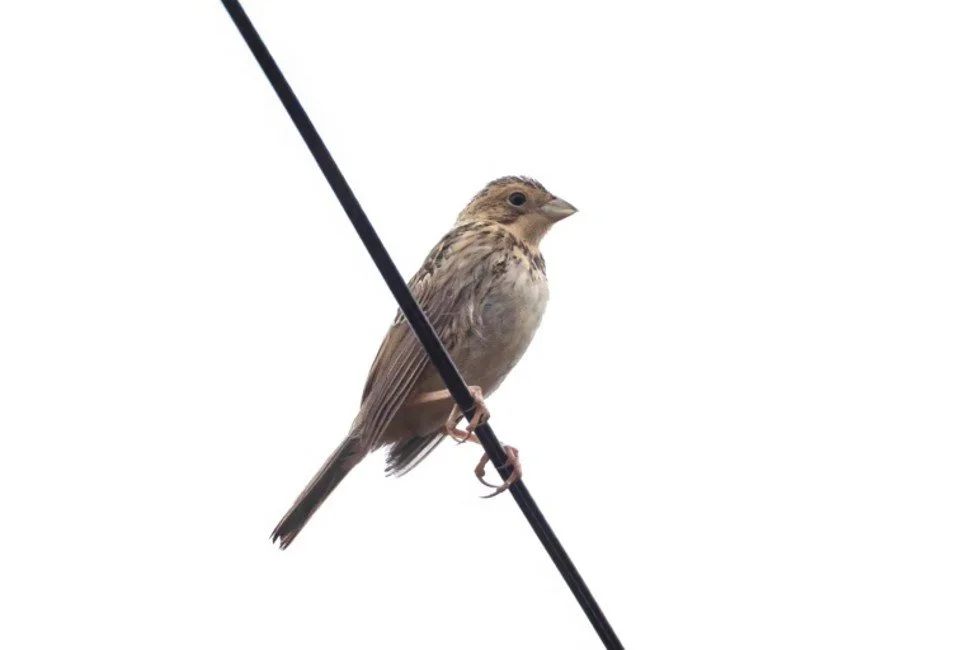
Corn Bunting Andy Hanby
On 5th, a lone Sanderling and 28 Stock Dove were notable.
The next day, the passerine threads became notable with three Common Redstart. These contributed to a total of 19 bird days till the month’s end - with birds caught and ringed indicating some turnover, rather than a pool of continuously present individuals. Also, on the passerine front, Spotted Flycatchers were noted on four dates.
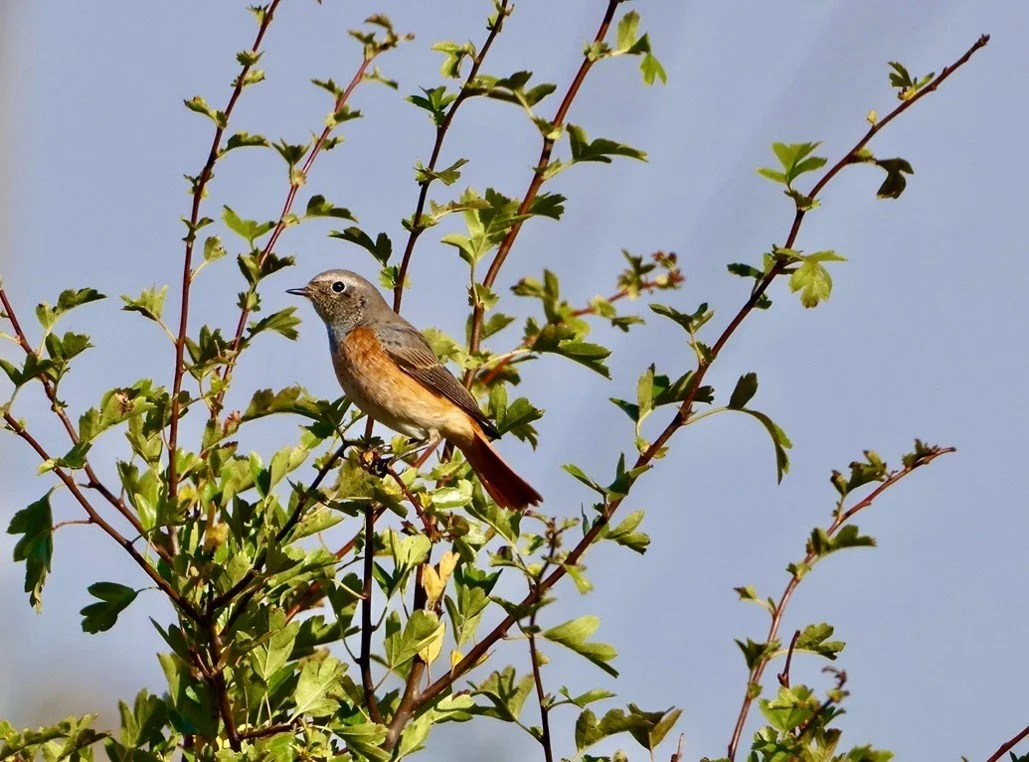
Common Redstart Andy Hanby
A Raven and a Tree Pipit on 9th are both common birds elsewhere, but rare in our recording area
On that particular day bird ringing was taking place – whilst the topic of debate at times, the efforts this year have given some insight into the volume of birds in the area and to how little we see. The total of warbler bird days, observed and ringed, combined this August versus August 2025, are as follows:
Willow Warbler: 77 versus 14; Chiffchaff : 112 versus 17; Blackcap: 123 versus 10; Reed Warbler 56 versus 5;, Sedge Warbler 21 versus 5; Garden Warbler 17 versus 1.
When one considers the full size of the recording area, the total number of warblers passing through the Nosterfield recording area will be quite impressive.
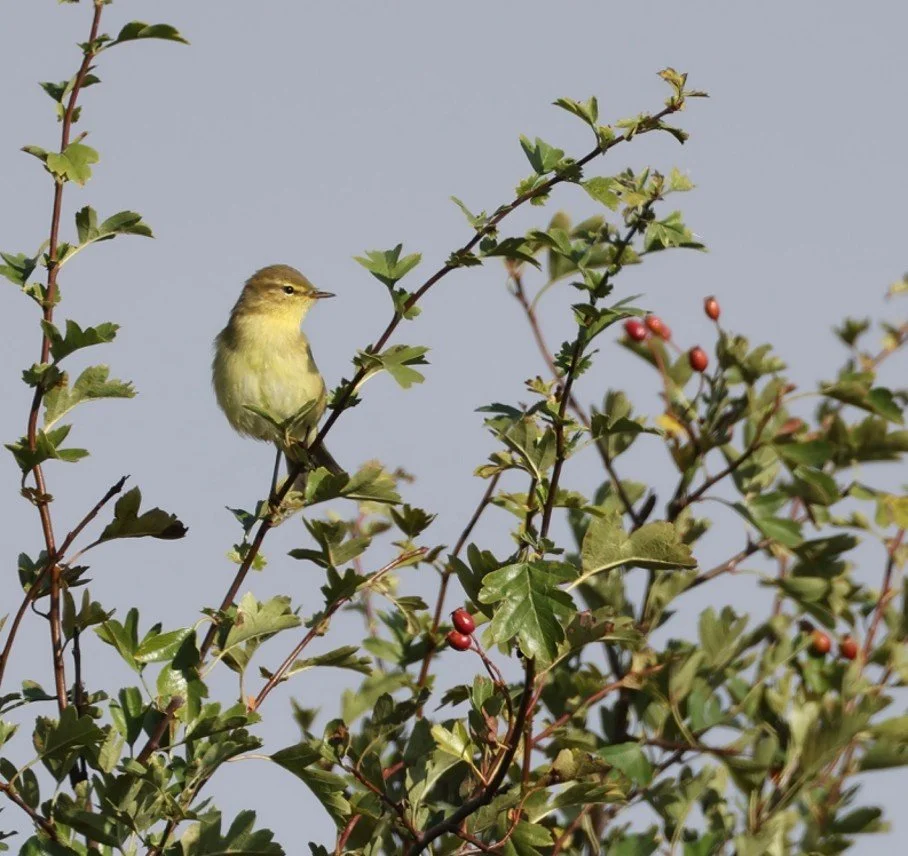
Willow Warbler Andy Hanby
Swift hit a maximum of 35 on 1st, with the last, a single on 24th, a time that always gives a scintilla of sadness, although a ‘tailender’ could appear at any time, even into October.
A party of five Marsh Tit and three Tree Sparrows on 11th showed that these scarce breeders are still hanging on in the area – but for how much longer?
The 13th saw two Common Scoter on Langwith Lake. Then from the 17th to 18th a Spotted Redshank took up temporary residence on the Reserve. On the former date, the bird biomass was substantially increased by Greylag Geese, with a count of 2232.
It was a great day on 20th - the finding of a further two Common Scoter was eclipsed by our third record of Cattle Egret. Four flew north through the Reserve and their trajectory suggested where the cows to look at might be. Such postulating often comes to nought, but on this occasion a quick drive found them pottering around under the legs of said beasts at Well Bend. Here they were observed for two hours before heading off north. This arrival coincided with multiple observations of moving birds to the south.
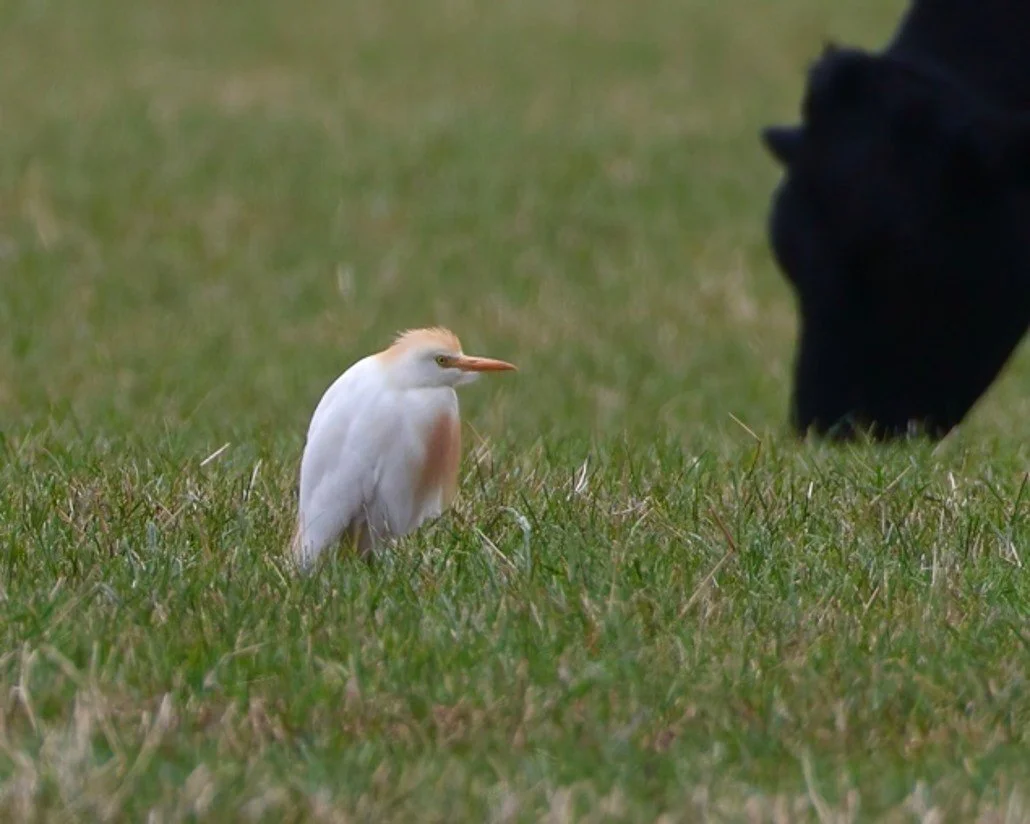
Cattle Egret Andy Hanby
Notables for the closing days of August included an early Great Black-backed Gull on 22nd, peaks of 170 House Martin and ten Yellow Wagtail on 27th, a Little Stint on 28th and a count of 334 Curlew on 31st.