
For a fourth season regular monitoring has taken place at Flask Fen along with ad hoc recording at the reedbed and on the main reserve.
A much better year with long periods of hot sunny weather, the improved conditions showing a marked difference in first and last dates of some species. The blue damselflies finishing some two – three weeks earlier than the previous year. Due to the lack of rain, the marsh and newt pond nearly dried out and as a result activity in late summer was greatly reduced.
The report below is based on verified data from irecord which includes records from BTO Birdtrack and iNaturalist. Many thanks to all who contributed records.
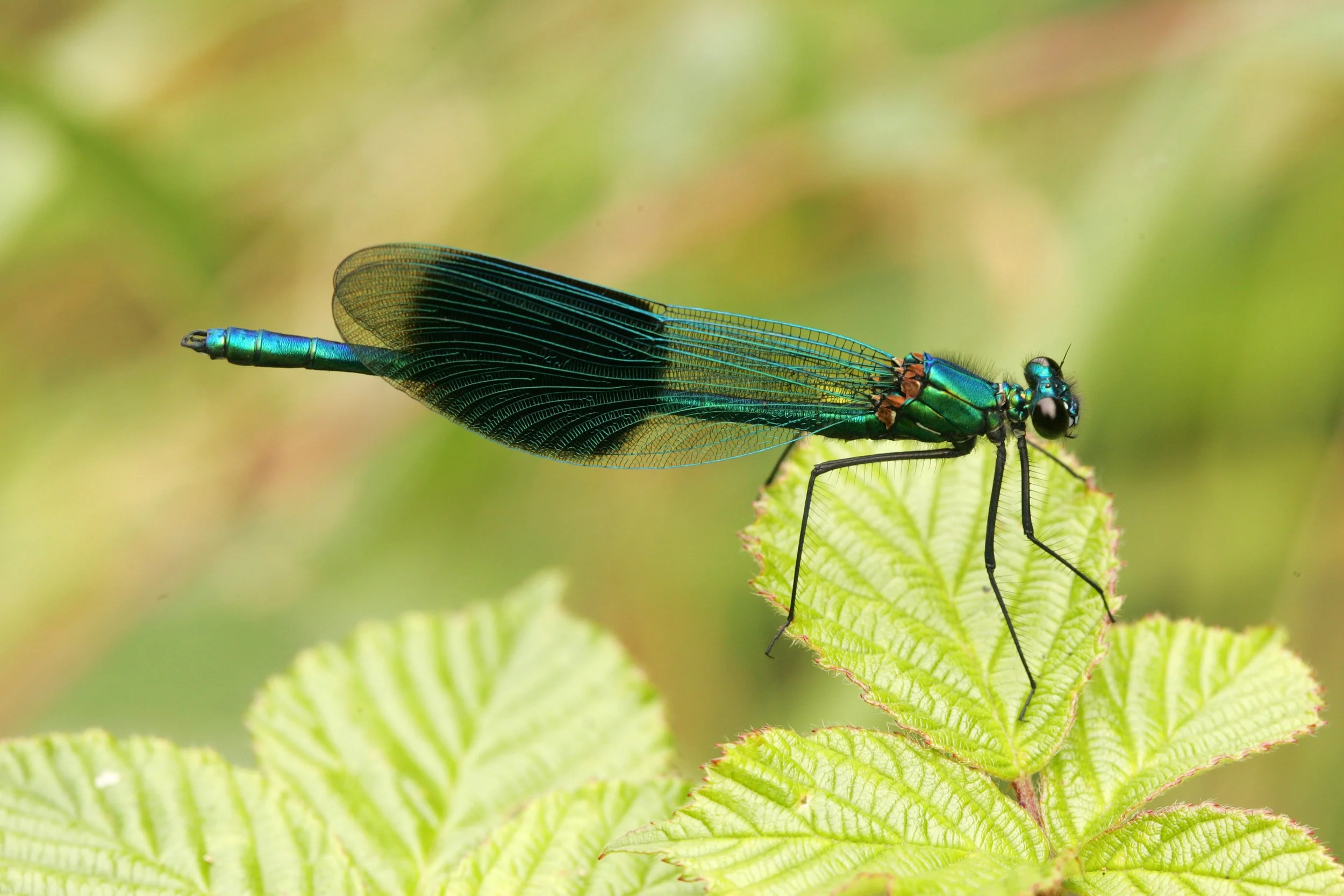
Banded Demoiselle (Calopteryx splendens) Whitfield Benson
Damselflies
Banded Demoiselle (Calopteryx splendens)
A small number of individuals recorded in July.
Emerald Damselfly (Lestes sponsa)
Only two records, both from areas adjacent to Flask Fen. The newt pond on July 8th and the marsh on August 12th.
Willow Emerald Damselfly (Chalcolestes viridis)
Only one sighting of two males from a willow at the marsh on September 30th, however egg-laying scars were found in December. Extremely low water levels in late summer meant the number of branches overhanging water was greatly reduced, this lowered site suitability for breeding.
Large Red Damselfly (Pyrrhosoma nymphula)
First emergence was noted on April 29th at the marsh and newt pond. Majority of records from these areas plus a couple from the fen and from the reserve. All records from late April and May.
Azure Damselfly (Coenagrion puella)
Now relatively common in the Flask Fen complex. Recorded between May 6th (one week earlier than 2024) and July 8th (three weeks earlier than 2024).
Common Blue Damselfly (Enallagma cyathigerum)
Widespread across the reserve and quarry. Recorded between May 6th and September 8th. Finishing 9 days earlier than 2024.
Blue-tailed Damselfly (Ischnura elegans)
Recorded between May 6th and September 2nd. An eleven-day earlier finish than 2024. Good numbers across the Flask Fen complex.
Red-eyed Damselfly (Erythromma najas)
Recorded between May 6th and July 9th. Mostly at the reedbed, all records from the quarry.
Small Red-eyed Damselfly (Erythromma viridulum)
Only two records, both from the reserve on July 11th and August 25th.
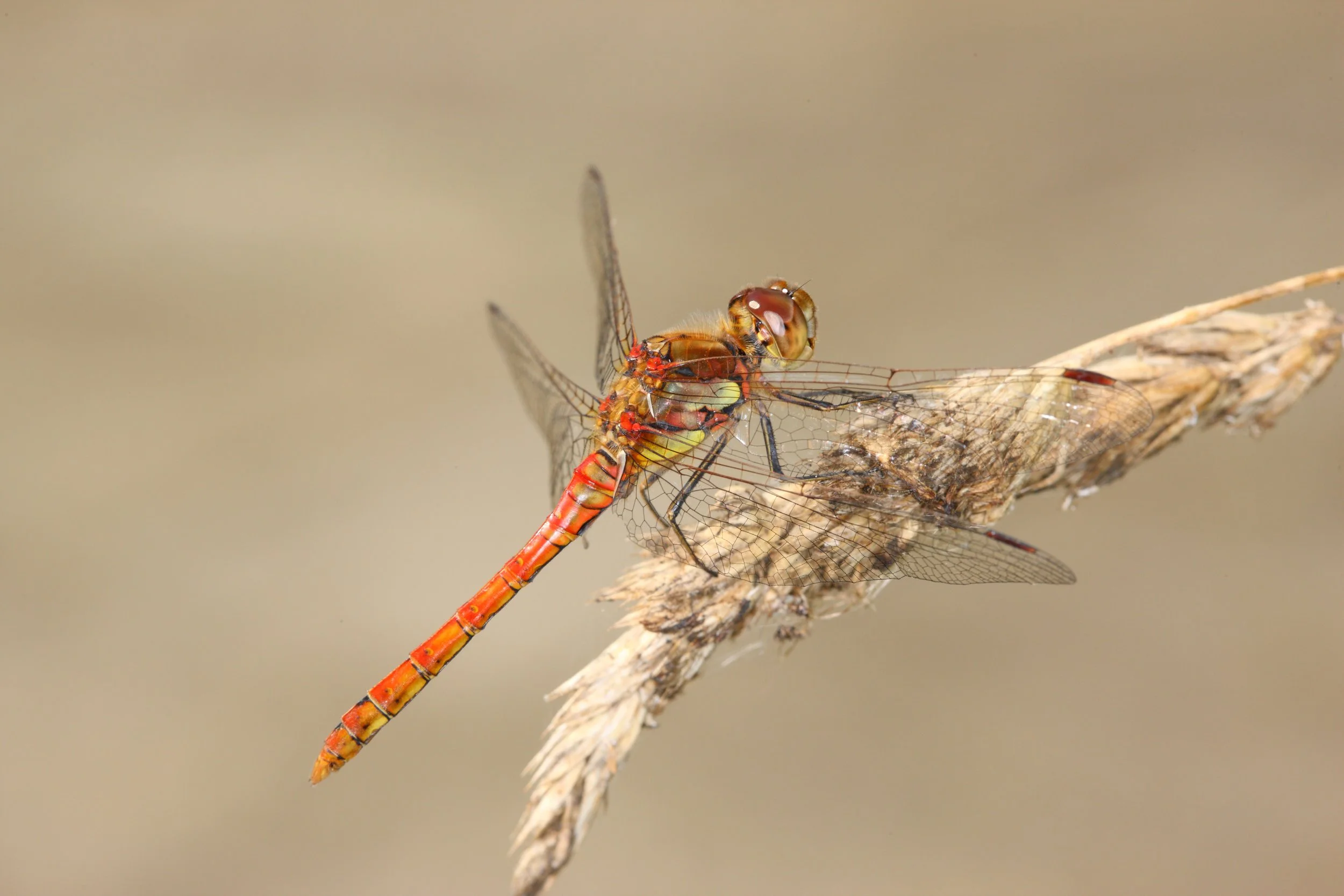
Common Darter Whitfield Benson
Dragonflies
Hairy Dragonfly (Brachytron pratense)
After a poor 2024, this year proved to be the opposite with numerous sightings across the quarry including ovipositing females. All records in May, between 2nd and 31st. A sole record from the reserve on May 25th.
Emperor (Anax imperator)
First record some three weeks earlier than 2024 on May 31st. Last recorded on August 13th, most records from across the reserve and quarry in June and July.
Lesser Emperor (Anax parthenope)
Despite the good summer there were no records for 2025, last recorded 2023.
Common Hawker (Aeshna juncea)
No records for 2025.
Southern Hawker (Aeshna cyanea)
Only five individuals recorded, all at the quarry site between July 30th and September 30th.
Brown Hawker (Aeshna grandis)
Records started some three weeks earlier than 2024 on June 30th. Recorded widely across the quarry site with a few records from the reserve. Majority of records in July/August with the last being on September 8th.
Norfolk Hawker (Aeshna isoceles)
Following a first record in 2024, up to two males were recorded at the reedbed on several dates between July 5th and 25th. The species was recorded at other sites across Yorkshire.
Migrant Hawker (Aeshna mixta)
Mostly recorded across the quarry site with four records from the reserve. First record on August 13th with a late record on November 1st.
Four-spotted Chaser (Libellula quadrimaculata)
Recorded mainly at the quarry. First record was of a teneral from the fen on April 29th, some ten days earlier than 2024. Recorded through May, June & July, the last record was July 29th around three weeks earlier than 2024.
Broad-bodied Chaser (Libellula depressa)
Six records from across the reserve and quarry between May 11th and July 13th.
Black-tailed Skimmer Orthetrum cancellatum)
Widespread, apart from one very early record on May 6th. Recorded between June 6th and August 25th. Most notable numbers from the reserve.
Common Darter (Sympetrum striolatum)
Widespread and common, recorded between June 17th and November 1st. The last record two weeks later than 2024.
Black Darter (Sympetrum danae)
A lone record from the reserve on September 29th.
Ruddy Darter (Sympetrum sanguineum)
Now appears well established particularly across the quarry with records between July 5th and September 8th.
Red-veined Darter (Sympetrum fonscolombii)
An unconfirmed sighting on October 6th from the causeway. It is possible as there was an influx in June and a teneral was recorded on September 30th at Marfield Wetlands.
Keith Gittens