
by Andrew (Andy) M Hanby
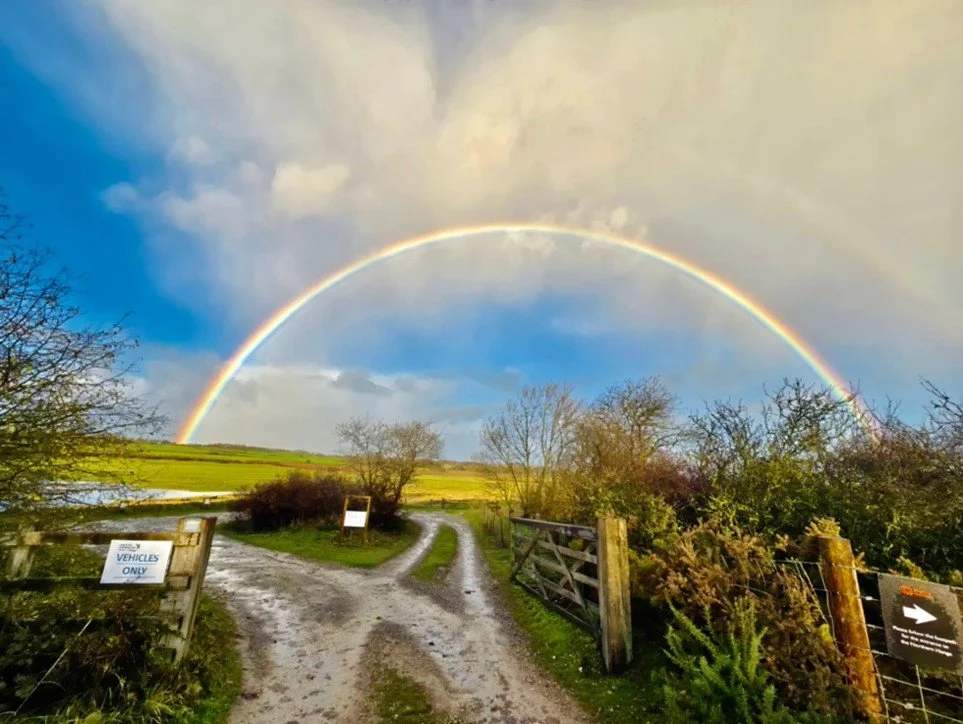
Rainbow over the Reserve ‘Elaine’
This is the month of confectionary - cakes, Quality Street and Celebrations and calorific regrets.
From the avian point of view, quality and celebrations were also to be had and Egrets, not regrets.
The early part of December was steady, with the usual background of regular wetland, woodland and farmland birds. Subtle interest was achieved by a late Lesser Black-backed Gull on 2nd and 450 Pink-footed Geese moving south on 3rd.
On 5th the first of seven Chiffchaff sightings was noted. Two different birds, in the vicinity of the Reserve and Flasks Lake area respectively, were seen sporadically throughout the month. To put this intocontext, we have only ever had one record of this species in December before. Also notable were 60 Siskin, the highest count of the year.
The next day, duck seemed to be everywhere in great numbers. Teal were particularly abundant, with a count of 1308 individuals the highest count we have ever documented on the Trektellen web site. I’d like to say that the female Red-crested Pochard found the same day, was the rose amongst the thorns, but I fear I may be shouted down regarding that species! Fifteen Bullfinch, 377 Curlew and a Whooper Swan also contributed to a quality day.
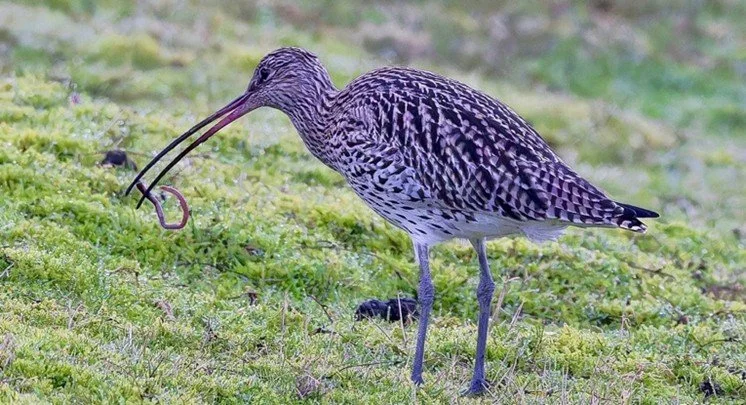
Curlew Steven Farrington
On 9th, further quality and celebration in the form of our first Black-necked Grebe since March 2022. Sadly, this didn’t stay around long enough for all to connect with it.
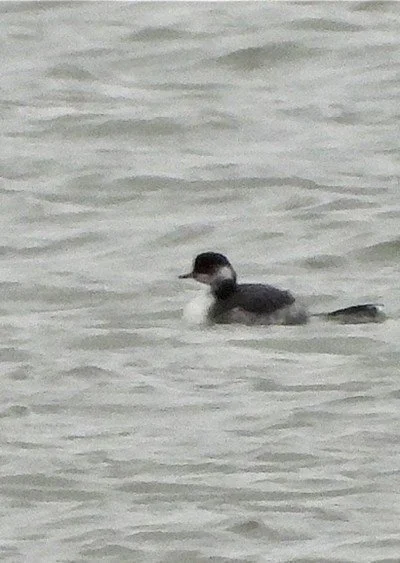
Black-necked Grebe Tim Jones
On 13th, a day when one of the group did his regular passerine counting loop around by the river, past the sewage farm and then back down Green Lane. The usual rewards are counts of some of the woodland and farmland birds. After finding a few Goldcrests and a creditable three Marsh Tits, the day got markedly better when the second Firecrest for the area popped into view down Green Lane. This bird proved to be extremely elusive, with an aggregate viewing time of all observations combined, probably less than three minutes, until its last sighting on 23rd.
A male Snow Bunting on 17th was even more exclusive and seen by only one observer on a shingle spit at Langwith Lake.
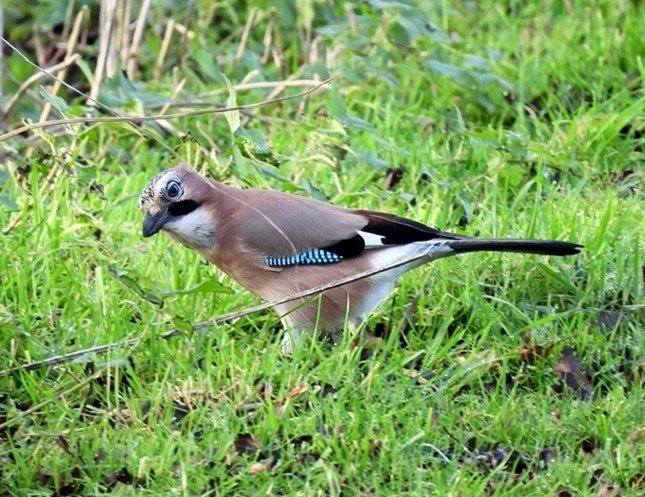
Jays were seen regularly during December Mike Smithson
A Black-tailed Godwit on the Reserve on 22nd was unseasonal, unlike the 12 Whooper Swans which flew north the same day. Also very unseasonal, was a male Common Scoter on the Reserve the next day.
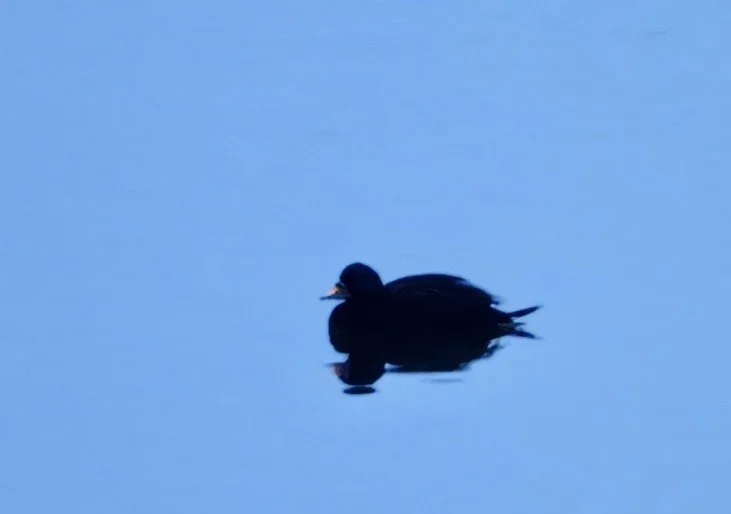
Common Scoter Tim Jones
On 24th, 27 Collared Dove were counted. Hard to believe, but this is yet another species that is in decline, so good to see we still have a fair few on our patch.
Langwith Lake scored again on 27th, with a brief ‘drop in’ Turnstone and again on 28th with a first calendar-year Mediterranean Gull. Also, on the latter date, the December build-up of Pied Wagtails culminated with a count of 76, mostly on a field by the Cedar Lodges holiday homes. A count of four Nuthatches the same day was also notable.
The latter half of the month was also characterised by a steady build-up of winter thrushes, with 270 Fieldfare counted on 29th, on which date, the final ‘quality’ bird of the year was located, a dapper male Scaup on Lingham Lake. Present the next day (and into 2026) this individual presented an observational challenge as it lurked behind screens of vegetation much of the time, with occasional forays into view in the centre of the lake.
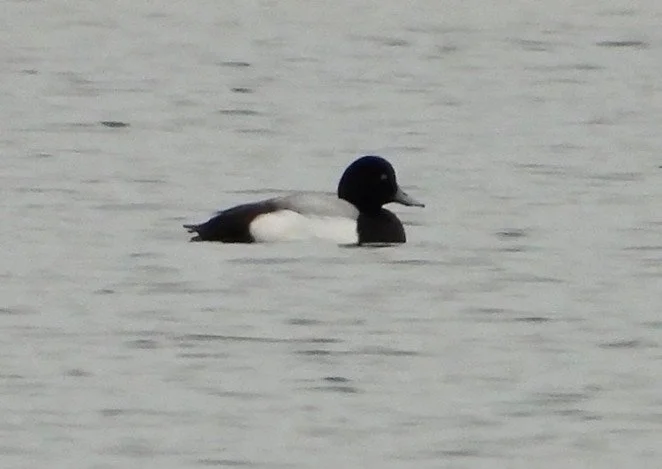
Male Scaup (from the archive) Tim Jones