
By Emma Higgs
LUCT Project Manager
Quarry Moor
During the last few months, we have begun working with Ripon City Council on some management work at Quarry Moor Nature Reserve in Ripon. The first stage of work is cutting back areas of scrub & brambles that are encroaching onto the magnesian limestone grassland, for which the site is a designated SSSI.
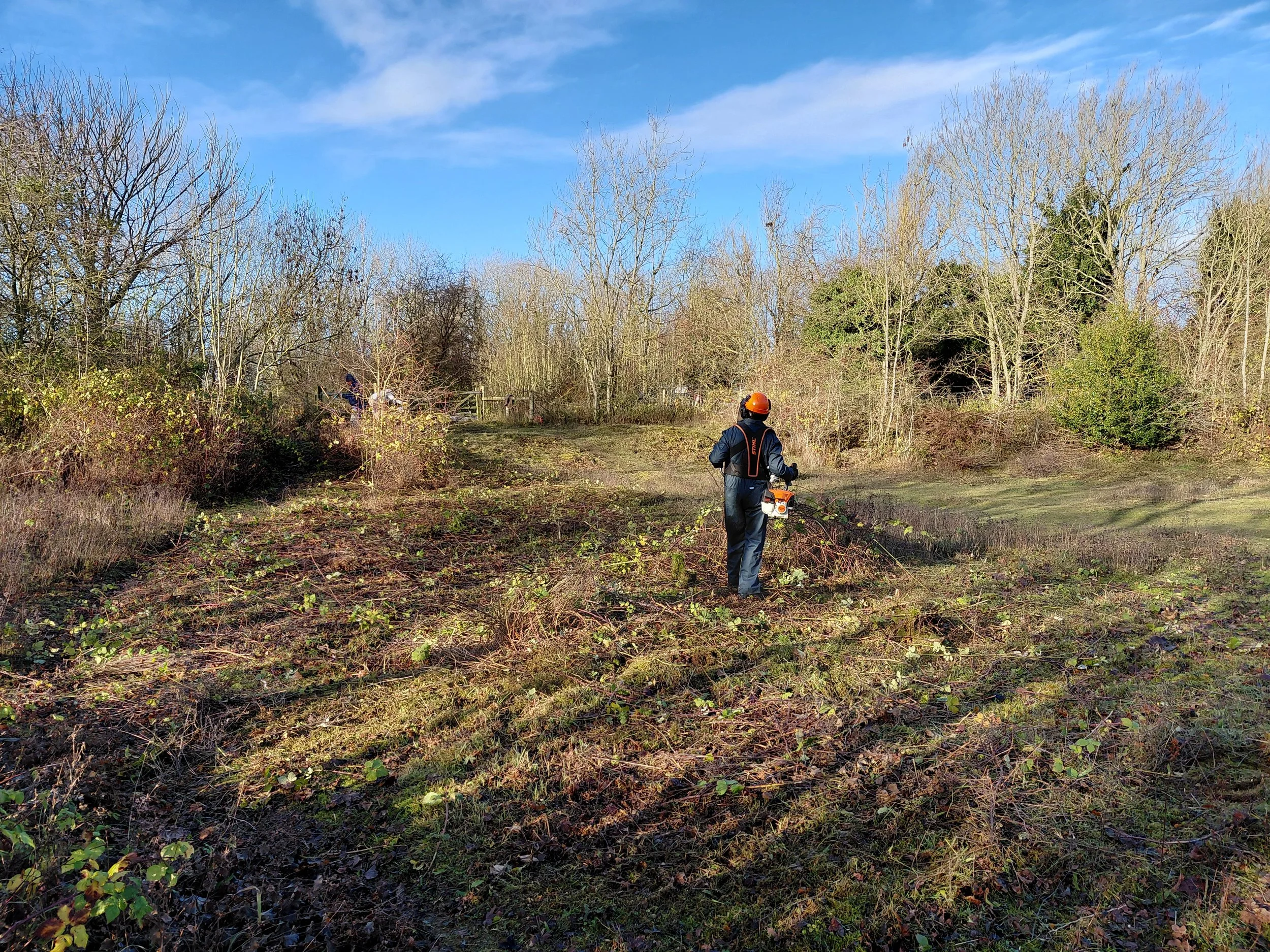
Quarry Moor
The grassland features a rare and protected schedule 8 protected plant called Thistle Broomrape, a parasitic plant whose host is creeping thistle. In the UK it grows only in Yorkshire, on magnesian limestone sites. All Broomrapes are parasitic plants, they lack the chlorophyll needed to synthesize their own energy, so instead take their nutrients from the roots of a host plant. Quarry Moor is one of the best sites in the UK for Thistle Broomrape.
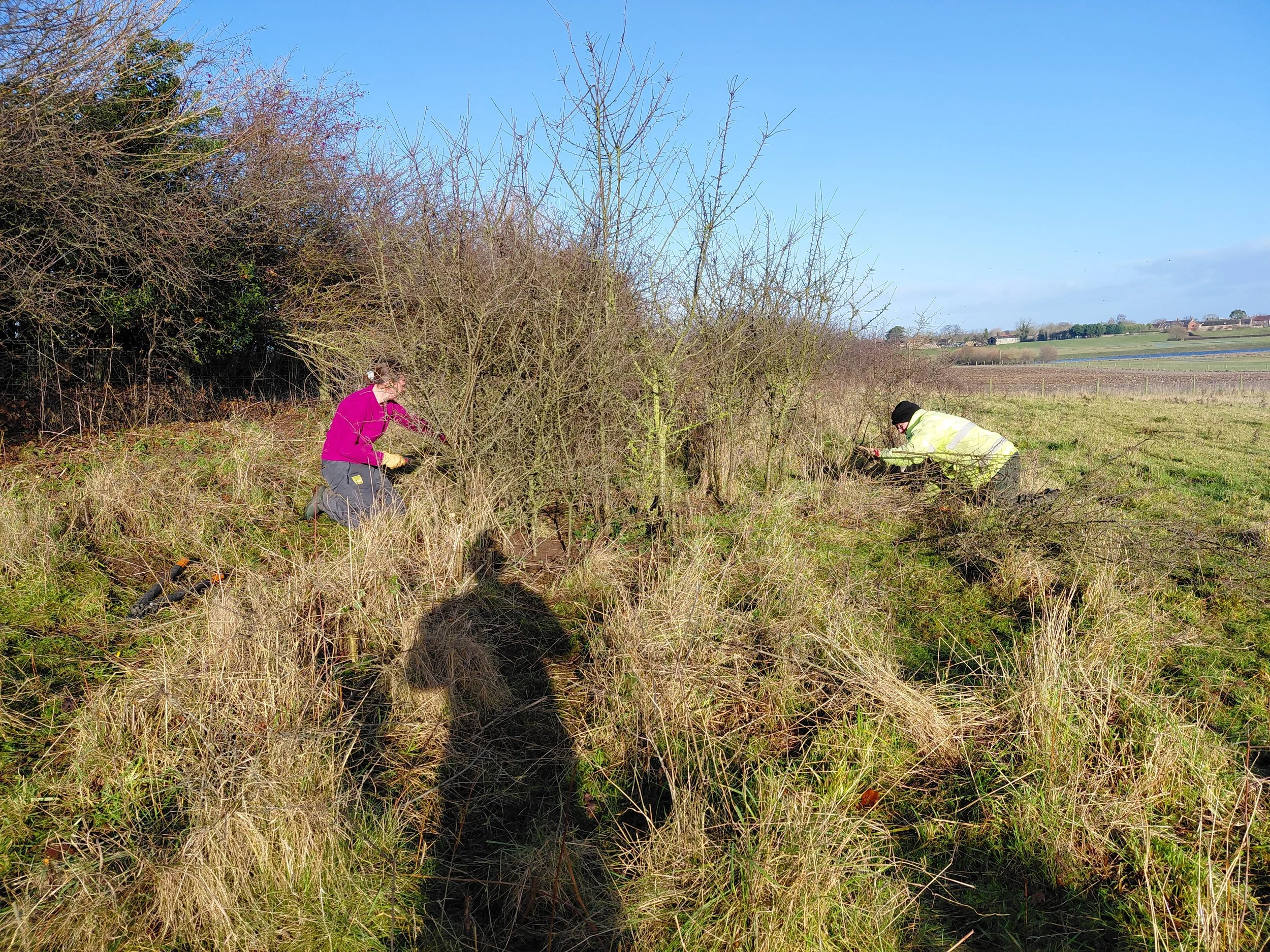
Blackthorn clearing
Blackthorn removal on Nosterfield Nature Reserve
We have also been continuing with removing the patches of Blackthorn on the wet grassland at Nosterfield NR. These scrubby patches can act as hiding places for predators such as foxes, so their removal is vital to protect the ground nesting birds that use the grassland to breed. Many of our breeding waders are facing severe national declines due to habitat loss and increased predation.
Thornborough Henges final planting
Working alongside staff and volunteers from English Heritage, we planted the final 2500 limestone plants on the Central Henge at Thornborough as part of the restoration project. Plants included Quaking Grass, Clustered Bellflower, Glaucous Sedge, Common Knapweed, Dropwort, Common Rock-Rose & Field Scabious. Over 8,500 plants had previously been planted in 2023 & 2024, taking the total to over 11,000 plants.
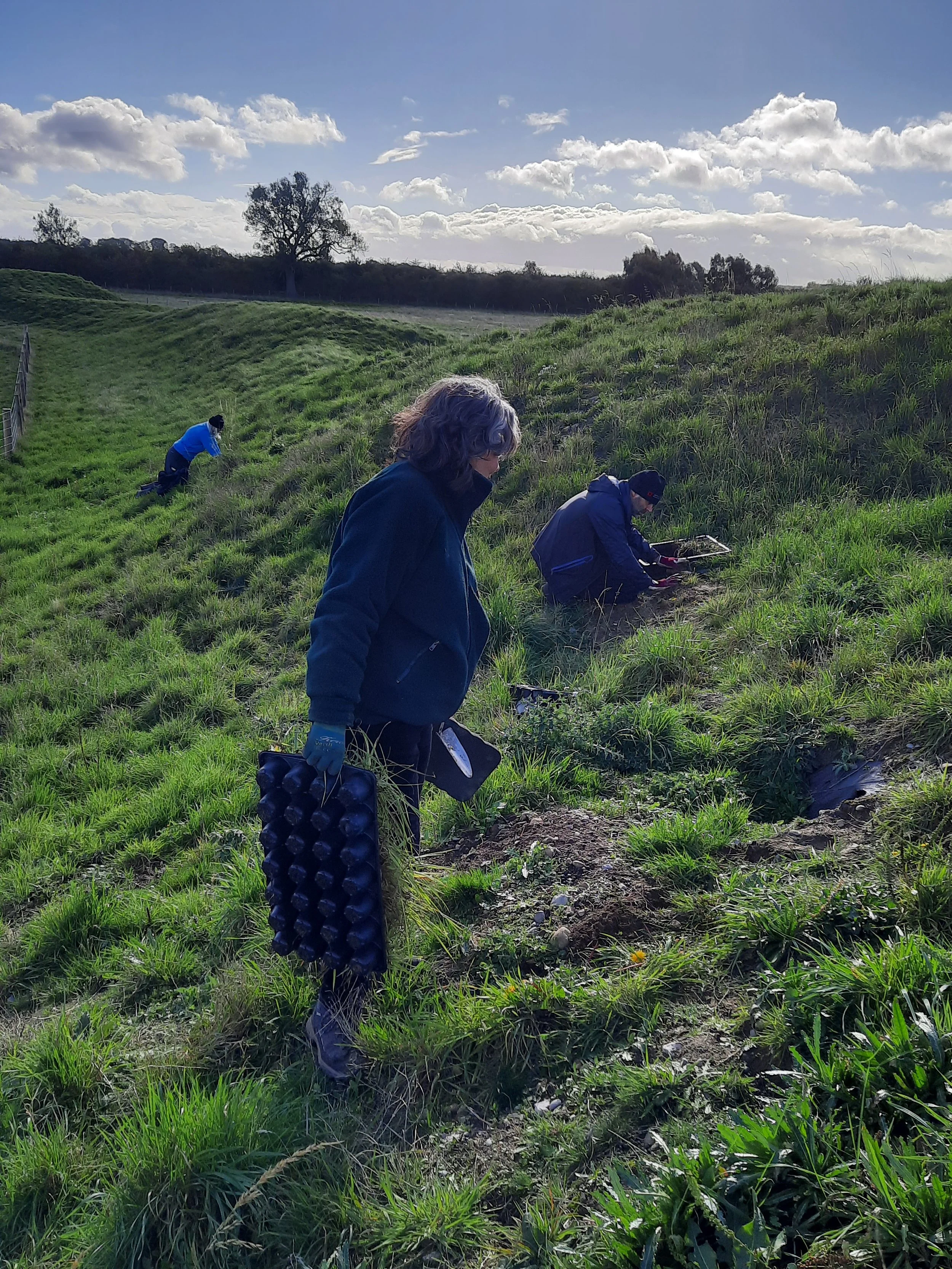
Planting at Thornborough Henges
As well as planting, we’ve also been carrying out regular hay cuts on the embankments to reduce nutrients and create better conditions for the limestone plants to thrive.
Fen creation at Langwith
Langwith is the name given to the North-east section of Nosterfield Quarry. The quarrying here has finished and throughout this summer, Tarmac have been land-forming to create some shallow areas on the edge of the lake that we plan to transform into species rich fen.
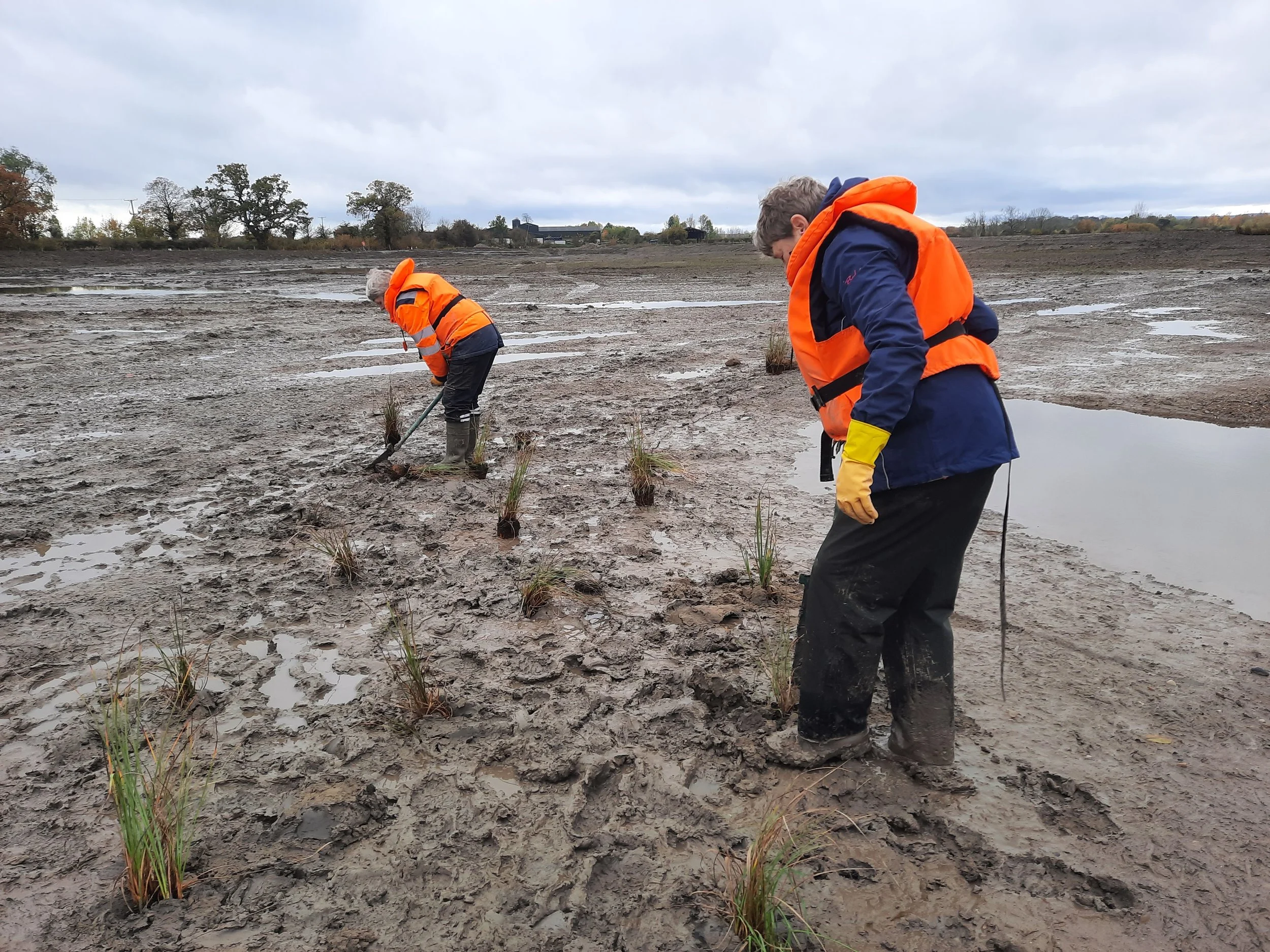
Planting on Langwith
Planting of wetland species such as Great Fen Sedge, propagated in our plant nursery, began in November and will continue for the next couple of years. This will create 2.4hectares of fen, a priority habitat in Yorkshire. Fens support a very rich variety of plants, insects, mammals & birds.
Kiln Viewing Screen
Our volunteers have been working very hard on our new viewing screen overlooking Kiln Lake at Nosterfield Quarry. The main screen structure is all but completed, but there is still seating, fencing and screening to install as well as filling and levelling the base which people will stand on. We hope to open before spring 2026!

The new Kiln Viewing Screen