
Habitat Management Highlights, January - April 2026
By Emma Higgs
LUCT Project Manager
Quarry Moor
We’ve been continuing our work at Quarry Moor, supported by Ripon City Council. This winter the volunteers have clocked up almost 200 hours clearing bramble from the magnesian limestone grassland to improve conditions for grassland wildflowers, and particularly Thistle Broomrape. Thistle Broomrape is also known as Yorkshire Broomrape as in the UK it is confined exclusively to Yorkshire, on magnesian limestone.
An interesting article on this plant can be found on the NEYEDC website: https://www.neyedc.org.uk/100-species/2023/10/19/47-thistle-broomrape-by-seebra-young, The author mentions that there is some debate about the rarity of Thistle Broomrape as the subspecies found in the UK, could possibly be a different species entirely, and would therefore make our Yorkshire plants the only population in the world!
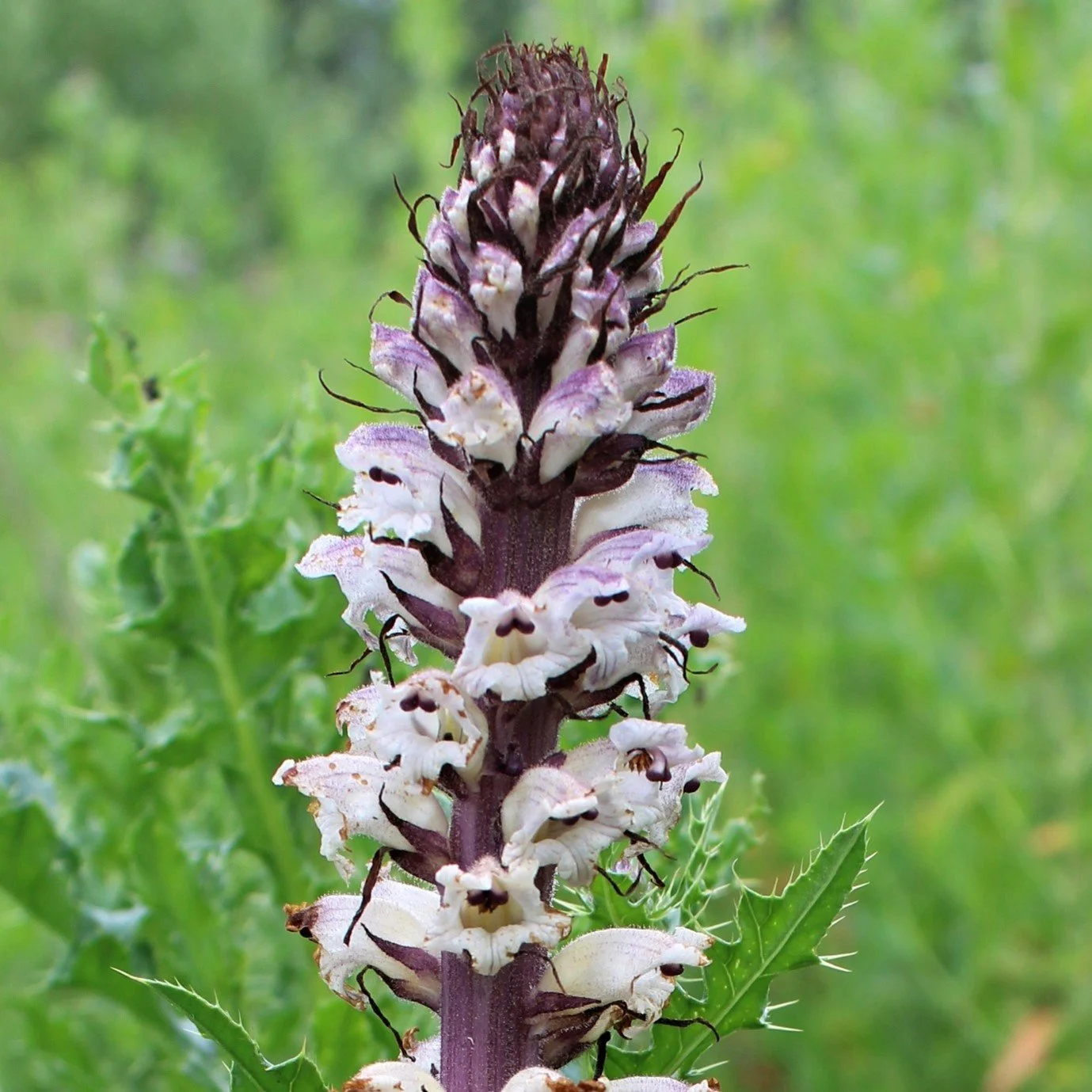
Thistle broomrape Simon Warwick
A huge amount of bramble was cleared this winter! A huge thank you to all our volunteers who helped with this work.
Willow coppicing & woodchip mountain
Parts of the new viewing screen on the path around Kiln Lake have been made from woven willow whips, harvested from willow growing just round the corner on the causeway on the edge of Flasks Lake. As well as being a cheap, renewable and low-impact material, I hope you’ll agree that they also look beautiful!
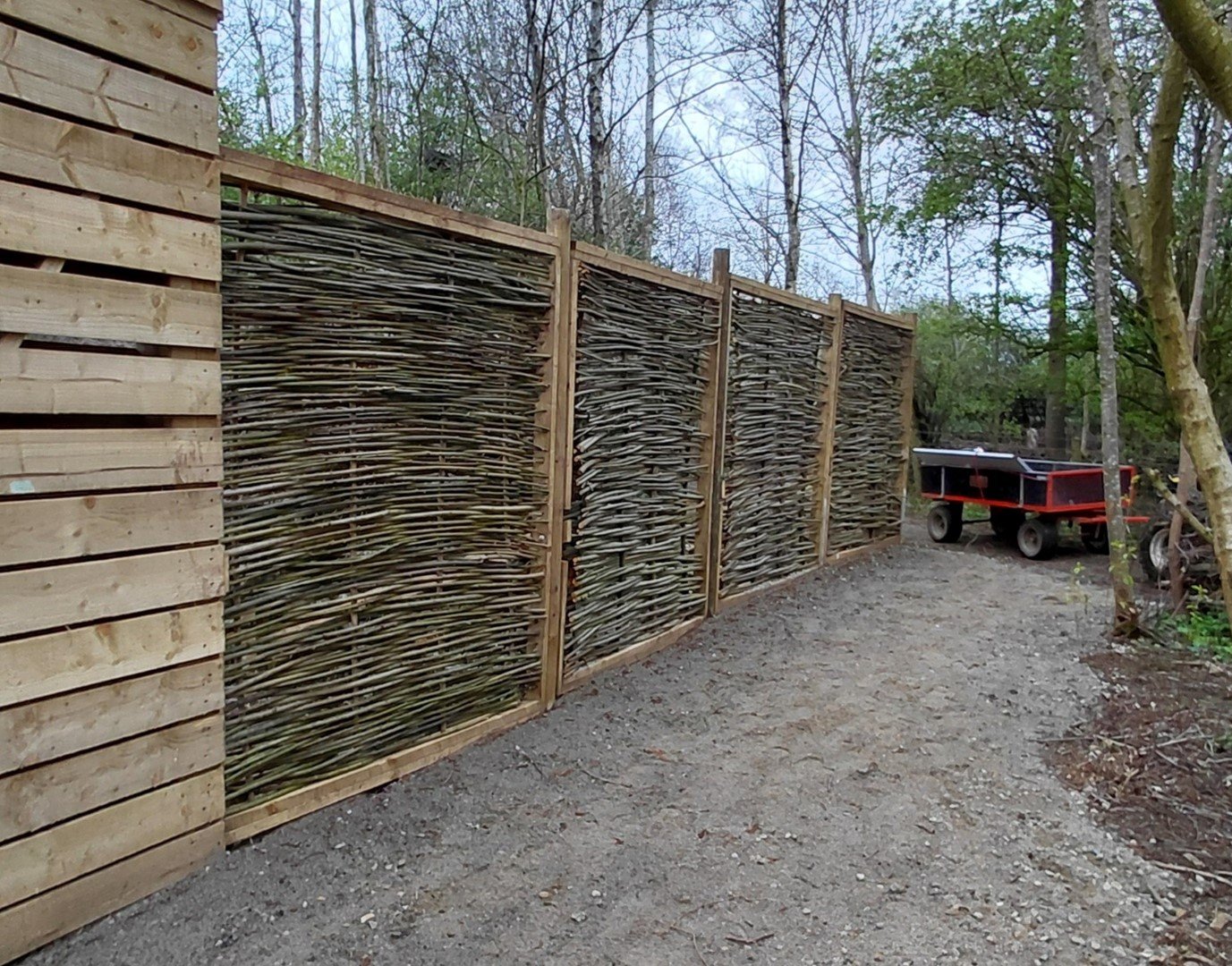
Woven willow panels, Kiln Viewing Screen
We coppice the willow on the causeway on rotation to ensure the trees here don’t get large enough for avian predators to use, which can have negative impacts on other breeding birds.
Cutting back willow also lets light reach the water's edge, which helps to encourage aquatic and marginal plants to grow, fostering a more diverse habitat. The dense, new regrowth also provides crucial nesting, feeding, and shelter opportunities for birds, insects, and mammals.
Coppicing in this way also provides poles and whips that can be used not only for weaving, but also as stakes and binders for hedge-laying and dead-hedging. Any material that is too thin or bendy to be used has been chipped by our volunteers – it created an unexpectedly large pile!
Coppicing work on the south side of Flasks Lake is planned for the coming winter.
Fish Refuges
We had a great turn out for our community day in March and one of the tasks we undertook was to install some fish refuges into Flask Lake.
We start the process by making brash bundles from waste material left over from winter coppicing or scrub cutting. They are then put in the water and tied to a post.
Putting brash bundles in freshwater lakes or lagoons is a highly effective, nature-based solution for improving aquatic ecosystems, acting as vital refuges by mimicking natural woody debris – something the quarry pits are lacking! The dense, twiggy structure of the bundles provides a safe hiding place for juvenile fish and freshwater invertebrates, protecting them from predatory fish and birds. They can also help to trap sediment and nutrients, encouraging the growth of marginal plants, which will provide further habitat complexity.
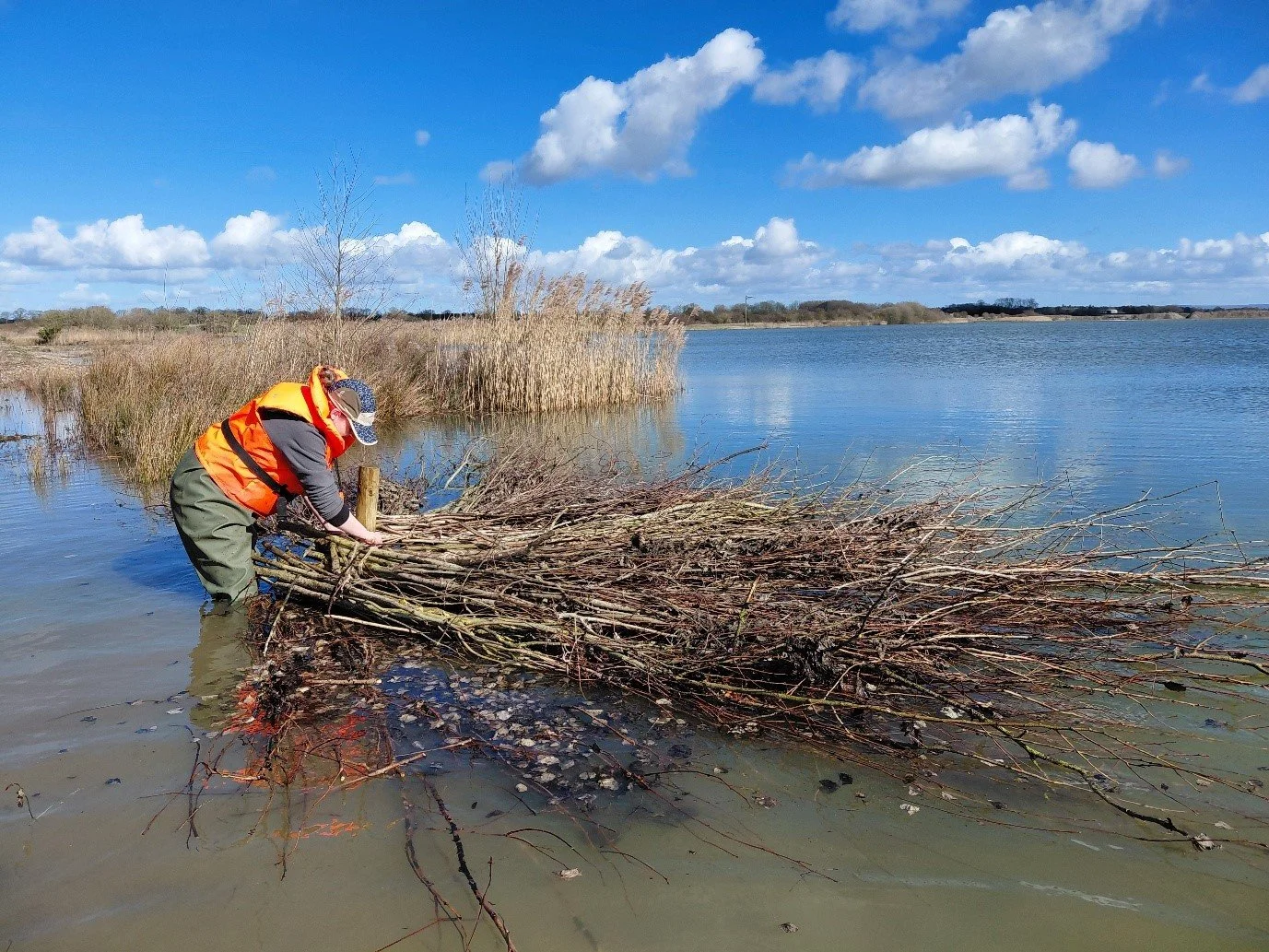
Installing fish refuges in Flasks Lake