
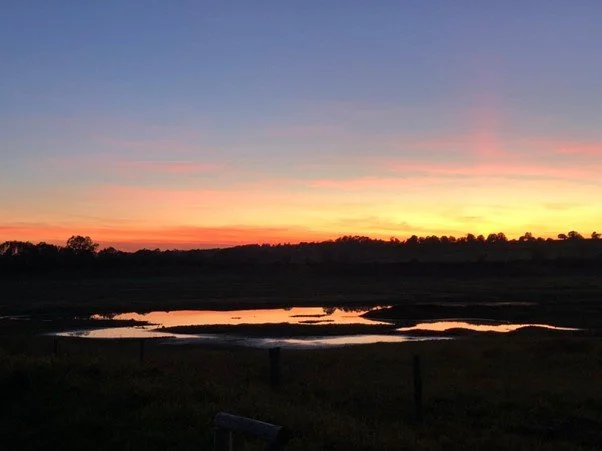
Red Dawn on the Reserve Margaret Hemsworth
The 1990s thriller ‘the Hunt for Red October’ tells the story of a rogue Soviet naval captain who wants to defect to the USA with his submarine. In the Nosterfield version, the pace is less racy and birds defecting from either America or the East are acceptable and it is fair to say, by birding standards, this month’s plot was reasonably gripping.
The very popular Red-necked Phalarope and the Bar-tailed Godwit were still on show on the first few days of the month, with a Eurasian White-fronted Goose thrown in for good measure on 2nd.
Regular quality birds included Pink-footed Geese and small numbers of Whooper Swan, Marsh Harrier and Bittern. You only have to go back four or more years, to a time when both the latter species could not be anticipated in a day’s birding in the recording area. In October 2021, Marsh Harrier and Bittern were present 11% and 0% of the month respectively. This month it was 60% and 35% - quite a change. Whilst a warming climate and increased observer coverage have contributed to that data, a major factor must be the excellent habitat management program – something to not take for granted.
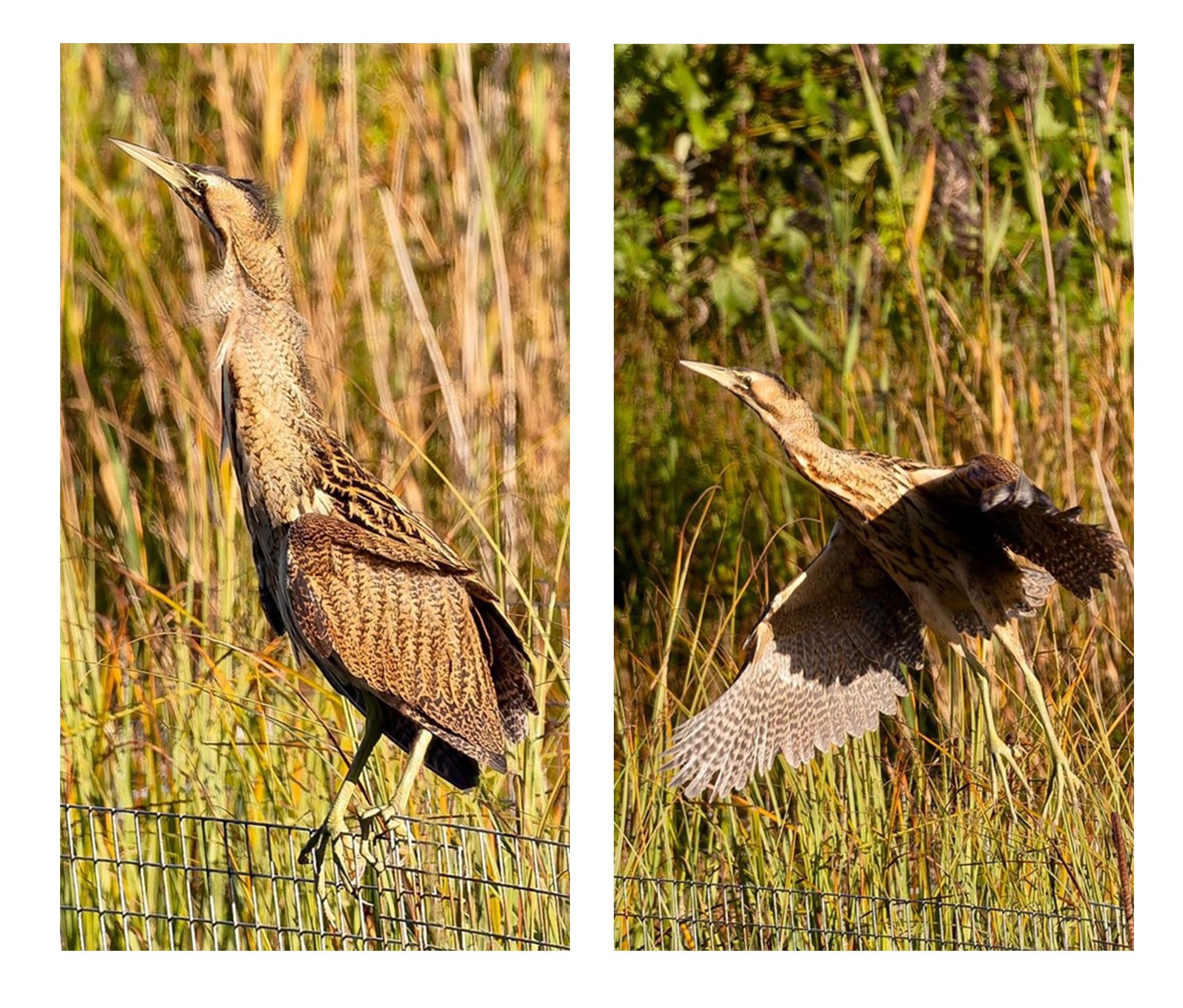
Bittern at the Reedbed Steven Farrington
The rest of the first quarter of the month was generally steady, with good numbers of Pochard again building in the Ladybridge area. After an absence of a few days, when it was seen at Staveley NR, the Red-necked Phalarope again popped up on the Reserve from 9th to 11th.
Visible migration watches were done infrequently, but at times could be rewarding. One such day was 11th, with good numbers of Lesser Redpoll, Skylark and a Swallow. The latter sighting was not the last however, with three feeding over the Reed bed on 22nd. For the record, our latest date for this species over the past few years is 27th October 2023 (two).
Another watch on 15th was notable for a movement of 258 Herring Gull in a north-easterly direction. Looking at gulls has been a signature feature of the area over the last few years, particularly via the efforts of one observer to read colour rings. This has been very rewarding, with birds from various parts of Europe visiting the Nosterfield ‘gull resort’, particularly Norway.
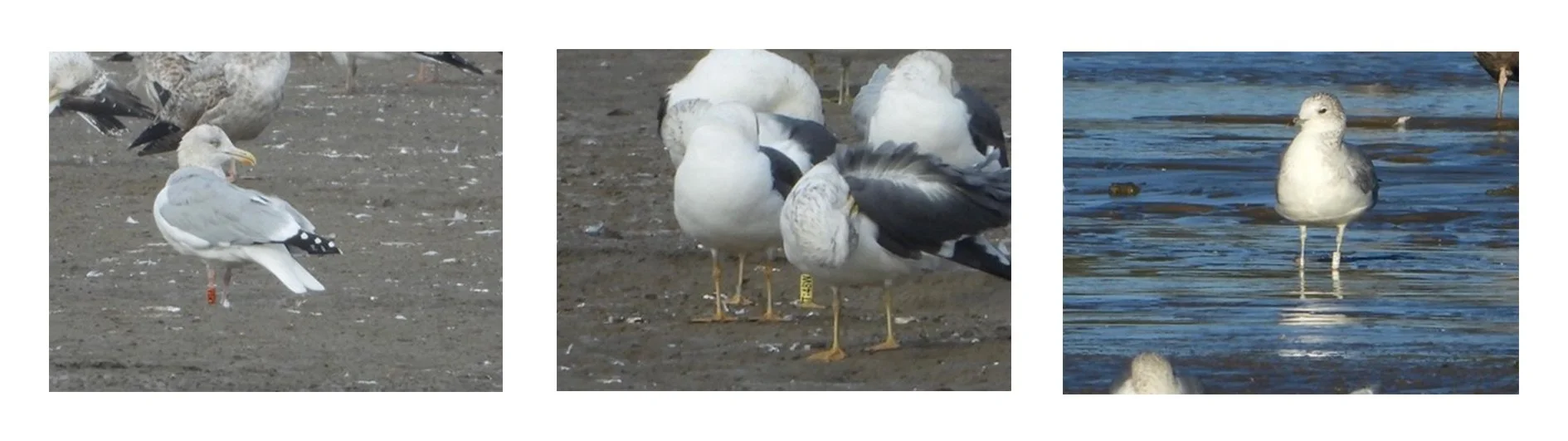
Colour-ringed Herring, Lesser Black-backed and Common Gulls Tim Jones
More visible migration effort on 17th was rewarded by a Merlin (also seen on 22nd) and six Corn Bunting flying north. Winter thrushes remained relatively few in number - not only locally but nationally. In particular, Redwing were well down on previous years; the total number of Redwing recorded moving on the visible migration website ‘Trektellen’ in the UK between 2020 and 2025, in the time period 30th September to 30th October are as follows - 2020: 362,502. 2021: 350,634. 2022: 556,041. 2024: 171,772. 2025: 51,861. This reveals a concerning trend.
The first Brambling of the autumn period flew south on 18th, as did 567 Fieldfare, but few Redwing the next day. Five Goldeneye and 16 Reed Bunting moving south were also notable.
Another interesting day was 20th, with three Bearded Tit in the Reed bed, a Wheatear on the Reserve and Yellow-legged Gull at Flasks Lake. The Wheatear represents our latest record by over a week.
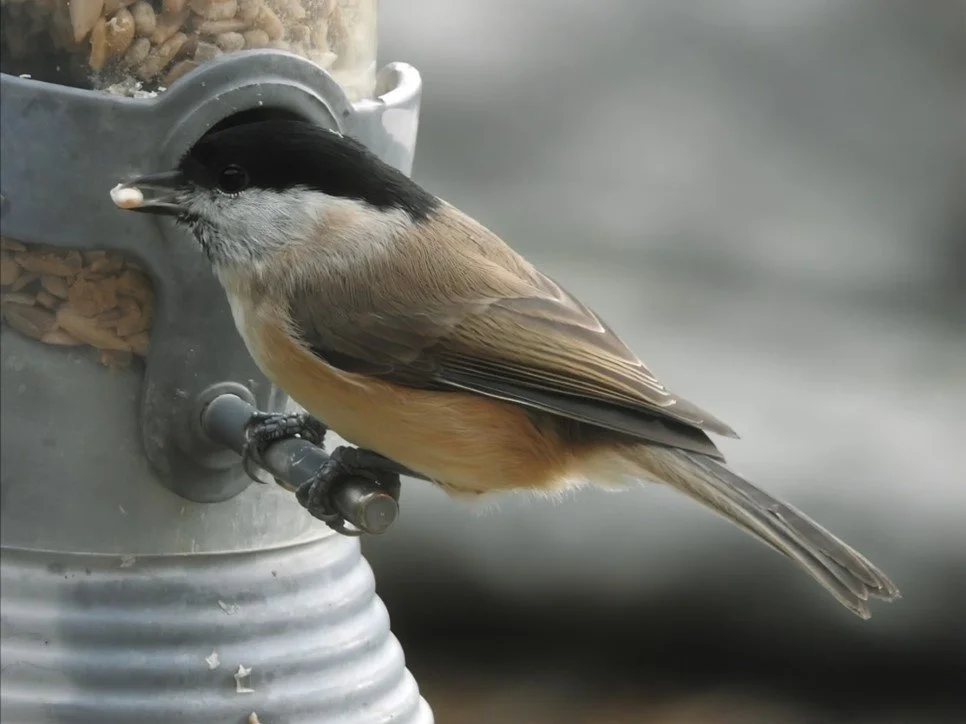
In all amongst all the exotica it is good that Marsh Tit is still regularly seen in the recording area
Gareth Jones
The 24th was a notable day, not for the find of a Red-crested Pochard, but a much rarer North American vagrant – a male Ring-necked Duck on Ladybridge Lake, which lingered until 26th.
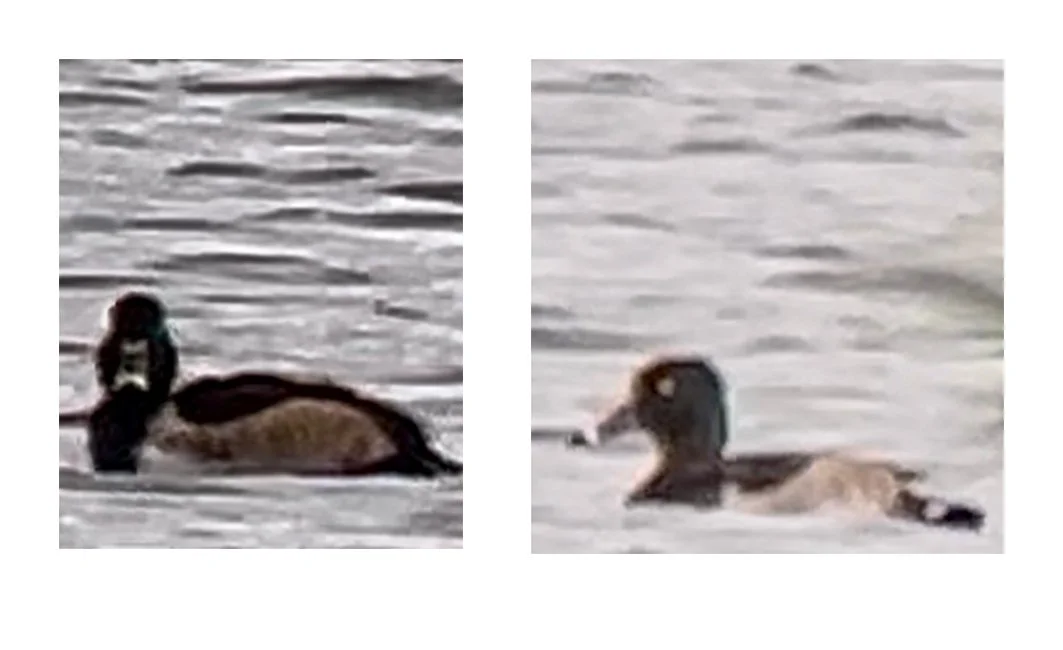
The somewhat distant Ring-necked Duck Tim Scott
The month ended on a relatively quiet note, but included the very nice observation of a Blackcap on 30th.
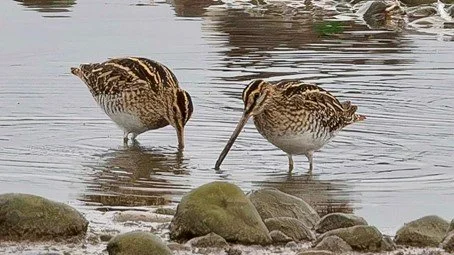
Feeding Snipe on the Reserve Steven Farrington
Andy Hanby 13/11/2025
Edited by Jill Warwick